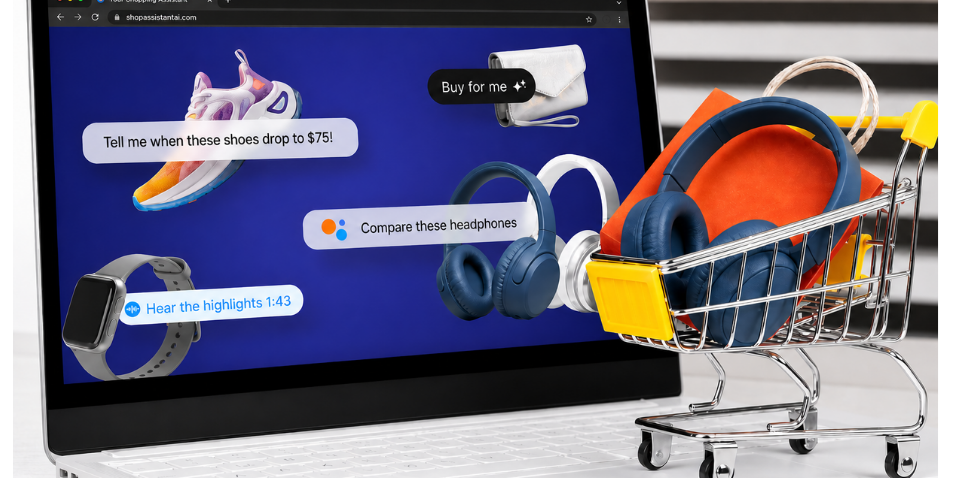
Inside Amazon's Hear the Highlights
Amazon's "Hear the Highlights," the AI-narrated audio summaries on product pages hosted by two synthetic voices, has quietly been live since May 2025. So why is everyone tweeting about it now? Two reasons. The feature just expanded across millions of products in the Amazon Shopping app, and Amazon bolted on a new interactive layer called "Join the Chat" that lets shoppers interrupt the AI hosts mid-conversation by voice or text. The hosts pause, answer, and pick up where they left off.
This isn't just a custom-generated podcast on a product page anymore. It's a truly interactive one. It’s a podcast (albeit a fake one), with synthetic hosts, and you can talk back to it. And that distinction matters more than it sounds, because it points right at why Amazon dressed up a shopping feature as a podcast in the first place.
Wait, It Said What?
The post that went viral about this? Olivia Moore, who spent 45 minutes feeding the system increasingly absurd prompts to try and break it. It would not break. Her standout question went something like:
"I was mauled by a bear as a child. Should I buy this five-foot inflatable gummy bear pool float?"
The AI hosts answered it. The response was safe, balanced, somewhat informative, but flat.
Business Insider's Katie Notopoulos surfaced an even stranger gallery, including an enthusiastic AI-generated discussion about adult diaper rash cream. Futurism caught the same feature waxing poetic about a fake dog poop product, complimenting the size and realism with affection.
There is a part of all this that is genuinely funny. Then if you play in the marketing sandbox there's the part that points to something much more interesting about why Amazon chose this format in the first place.
Amazon Already Has Rufus. So Why This?
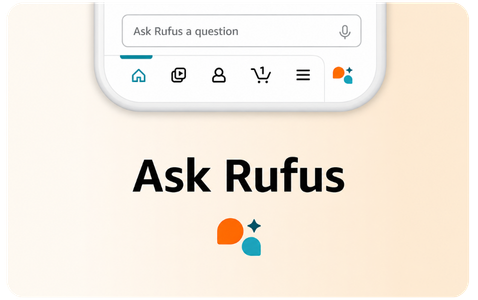
Amazon already has Rufus. It already has voice search, narrated text, expandable bullet points, and roughly fourteen different ways to surface product information. The company is not short on AI-driven shopping interfaces. So why, when designing a brand-new feature for product pages, did Amazon decide to dress it up as a podcast?
Well, if you have ever listened to a podcast or regularly tune in you know what that feels like. They sound and feel personal, and when done right so do the ads that run on them. There is a difference between hearing an ad and hearing a host you have followed for years tell you they keep a bottle of something on their counter. One you may tune out, skip, or not quite get. The other you remember. And years of stats support this. Sometimes you even act on those recommendations. Amazon noticed. Of course, Amazon noticed!
Two Things Can Be True at Once
Podcasts are a main media stream with a reputation for delivering trust and authenticity. So much so that many listeners prefer to get their news from their favourite hosts.
And while AI is a superpower for so many things, AI-generated content dressed up as real conversation can erode listener trust in the broader podcast medium. If listeners cannot tell what is human and what is synthetic, the whole format pays a price. None of this is a new reflection. The media and marketing industry has been working hard to find ways to ensure listeners know when something is not quite as it seems or AI-generated, but the path is nowhere near perfect. And just like those lip-syncers from the 90s, we can't blame it on the game. The importance of disclaimers and distinction has never been higher.
But sitting right beside that concern is something quietly affirming. When the world's largest retailer decides the most natural way to share product information with a customer is to generate a podcast-like product, it is not nothing…. it’s a whole lot of something.
They picked the medium because the medium works. They mimicked the format because the format earns attention in a way very few others can.
You cannot fake your way into trust. The fact that a giant like Amazon is even trying tells you exactly how valuable real trust is.
A Real Host Has Something to Lose
A real podcast host has something to lose. They have a relationship with an audience that has taken time, sometimes years to build, and they are not going to torch it for an ad read of a product that is just not a fit for their audience. They know their voice, content, point of view, and what they support drives their listeners' trust and keeps them tuning in.
Amazon's AI hosts have some pieces down for sure. They are conversational. They pause and answer, almost human like. What they don't have, and what no AI host will have for a while yet, is anything to lose.
Diaper rash cream, fake dog poop, and a five-foot inflatable gummy bear all get the same upbeat "podcast" treatment, because for robots every product is the same product. That new skincare line your favourite host swears is giving them the summer glow they always wanted? To an AI host, it is no different than the GPS tracker for our little four-legged family members. Same enthusiasm. Same script format. Same nothing on the line.
The Bottom Line
The takeaway: If a company the size of Amazon sees the podcast format as worth borrowing, podcast advertising is doing something right. It’s working for hosts, for brands, and for the listeners who keep coming back and that’s something you can’t fake.

Sherry Del Rizzo
Sherry leads editorial at ADOPTER Media, translating the agency's campaign experience and podcast advertising expertise into education for the industry. Her job, in short: take what ADOPTER learns from running real campaigns and turn it into something worth reading.