Insights From ADOPTER Media Buyers
Buyers who have been working in the podcast space for years can usually tell quickly whether a show is a fit for their brand. Sometimes it takes one episode. Sometimes it takes a glance at the sponsor history. Either way, the read happens fast.
That gut call isn't magic. It's pattern recognition built from training, hours of listening, and the kind of feel for a show that only comes from doing the work over and over. Like a good recipe, the ingredients tell you when something is right, even when you can't always explain why in one tidy sentence.
We asked our buyers to share the ingredients that make a show feel just right. Here is what they said.
A Quick Note on Format
A podcast is an on-demand, audio-first format, distributed through an RSS feed and played wherever the listener prefers. A sponsorship is advertising built around a strong association between a brand and a show or publisher.
Brands have choices when it comes to format, ranging from producer-read spots to programmatic ads. And then there are host-read ads, where the host of the show delivers the message in their own voice. This post is about that last one. When people ask us what makes a podcast sponsorable, they're almost always asking about host-read.
Host-read sponsorships work because they prioritize authenticity over rigid scripts, turning ads into recommendations instead of interruptions. Listeners spend hours every week with their favorite podcast hosts. Over time, that builds something researchers call a parasocial relationship, the one-sided closeness people develop with someone they listen to regularly. Research consistently shows that podcast listeners trust their hosts more than personalities on TV, radio, or social media.
When the Host Can't Stop Talking About the Product
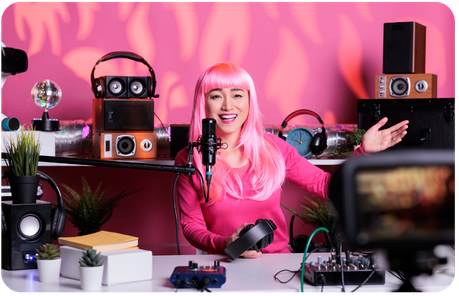
Shane Estrada on what a great personal endorsement actually sounds like:
"When we say Personal Endorsement works, we really mean it. For one of our clients, the talking points are incredibly short, with only a few main points required. Outside of that, the majority of the read is left open for each host to talk about what they love about the product, why they use it themselves, and why they recommend their audience buy one too."
The strongest talking point a brand can use is one the brand didn't write. Shows know their audience better than any brand or agency ever will, and when a host genuinely loves a product, that trust carries straight over to whatever they're recommending.
How do you spot it? Length is your first tell. If a 60-second read stretches past 90 seconds, the host is almost certainly riffing on their own experience. But even more than length, listen for enthusiasm. You can hear the difference between reading and recommending.
When the Same Sponsors Keep Returning
Bridget Isacs on what renewal history actually tells us:
"Sponsorship history is a key part of our process. We look at sponsors with similar audiences and performance-driven goals to see if a show is worth a test. If indicator sponsors tested for a couple of months and didn't renew, that's invaluable. It tells us something about the reads or audience engagement isn't working for them and probably won't work for us."
The flip side is just as useful. When indicator sponsors keep renewing month after month, that's confidence we can borrow. We're open to taking risks, but we also lean on the risks other brands and agencies have already taken to inform our buying strategy.
Tools like Podscribe make this kind of pattern visible, and once you start looking, the renewal story almost always tells you what you need to know.
When a Great Show Isn't the Right Show
Adam McNeil on what 'sponsorable' actually means:
"The first thing I'd push back on is the idea that 'sponsorable' is a property of the show itself. It isn't. A podcast that's a slam dunk for one brand can be totally wrong for the next, because fit is brand-specific. I try to evaluate every show the way I'd evaluate a job candidate: does the audience profile actually match who buys this product, has the show worked for adjacent brands with similar goals, and would the host genuinely use the thing themselves? When all three line up, the read stops sounding like an ad and starts sounding like a recommendation. That's what I'm listening for.
How to spot it? Pull the show's last six months of sponsors and ask whether your customer would buy from any of them. If yes, you're probably in the right room. If the list looks like a different demographic entirely, the audience isn't yours, even if the host is great."
There's no universal sponsorability score. There's only fit. The audience your product needs, a track record that proves the format moves them, and a host who'd actually use the thing.
When the Host is Selective
Elsie Kaplan on what's really underneath the ad load debate:
“Everyone always wants to lecture and complain about ad load (how many ads appear in each episode). But what’s really underneath this unspoken rule?
The host’s authenticity. There’s no way any real human being can authentically recommend you try 5 different supplements companies, a mental health app, a red light mask AND blue light glasses, baby food, sheets, a specific brand of coconut water, and 2 different meal kits.
Ad load isn’t just about having too much pointless crap in your episode, it’s more about the weight your endorsement has. The less brands a host agrees to promote, the more you know, when they’ve said “yes” to your brand, it’s legit, and their recommendation to their audience is going to go a long way.”
A short, curated sponsor list is a credibility signal in itself, and listeners can feel when a show has become a sponsor buffet long before they can articulate why.
How to spot it? Pull up the last few episodes and count the distinct brands. If you can't keep track on one hand, the endorsement probably won't carry the weight you're paying for.
When the Host Actually Sounds Like Themselves

Michael Kobes on what he listens for in a host read:
"The host sounds natural in their reads, not forced or produced. I'm listening for host flow, where the pacing and tone stay the same when they move from their regular programming into the ad break. I'm listening for small imperfections, where it sounds like a real person having a real conversation, not a robot reading a script.
I'm listening for natural transitions, because the second a host says 'and now a word from our sponsor,' some listeners check out. And I'm listening for authenticity. It should sound like they actually use the product and love it. When it's authentic, it feels more like a recommendation than an ad."
The best host reads don't sound like ad breaks. They sound like the host being the host, talking about something they happen to love. If you can't tell the read from the rest of the show, the host is doing it right.
Podcast Sponsorship Success
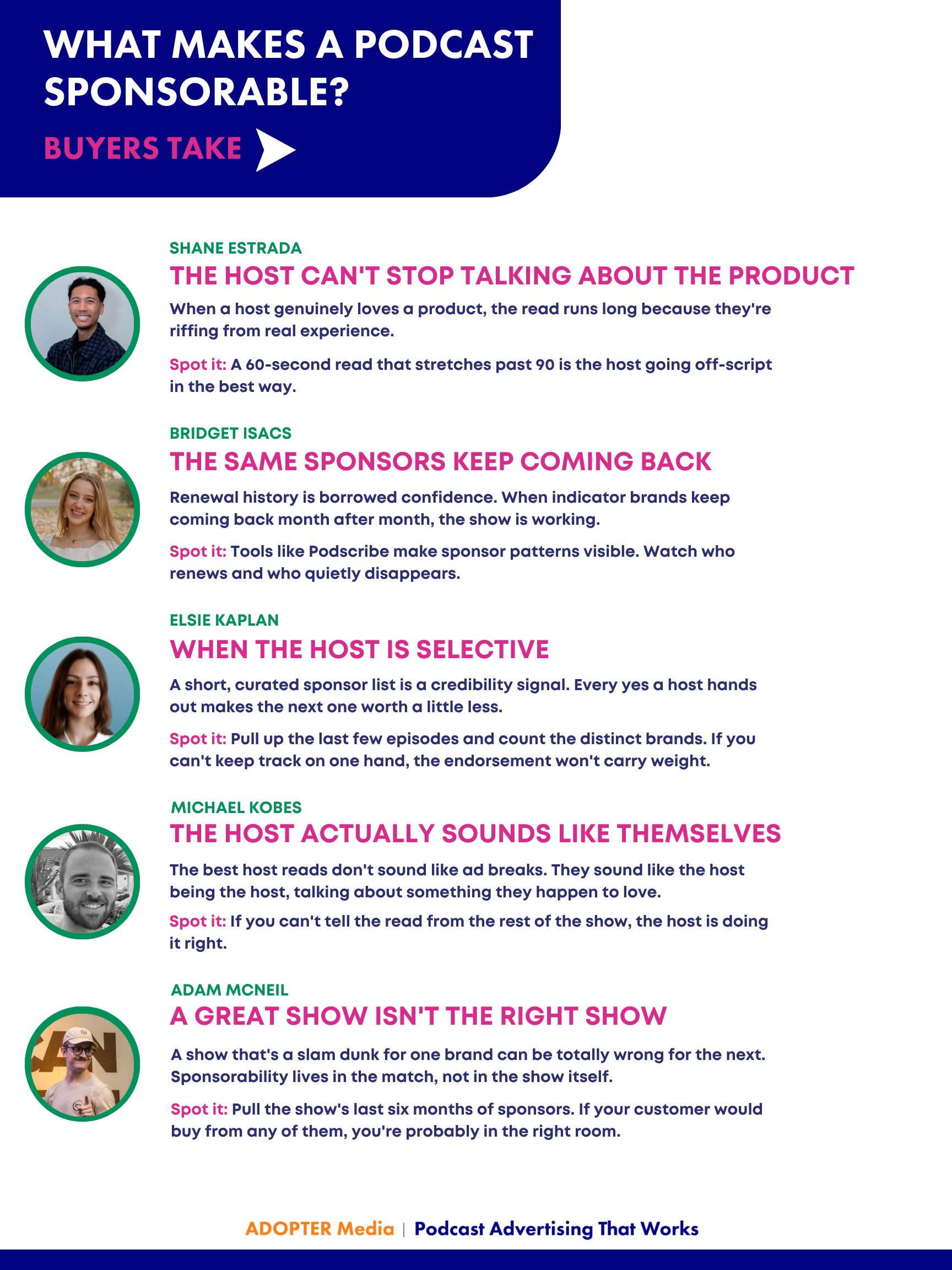
The common thread among our buyers? It isn't about reach. It isn't about CPM. It's about trust, between the host and their audience, and between the brand and the show. That's the recipe. And once you know what you're listening for, you can't unhear it.
If you want to pass this along to your team or save it for the next pitch, we pulled the tells into this buyer's checklist.
Sherry Del Rizzo
Sherry leads editorial at ADOPTER Media, translating the agency's campaign experience and podcast advertising expertise into education for the industry. Her job, in short: take what ADOPTER learns from running real campaigns and turn it into something worth reading.