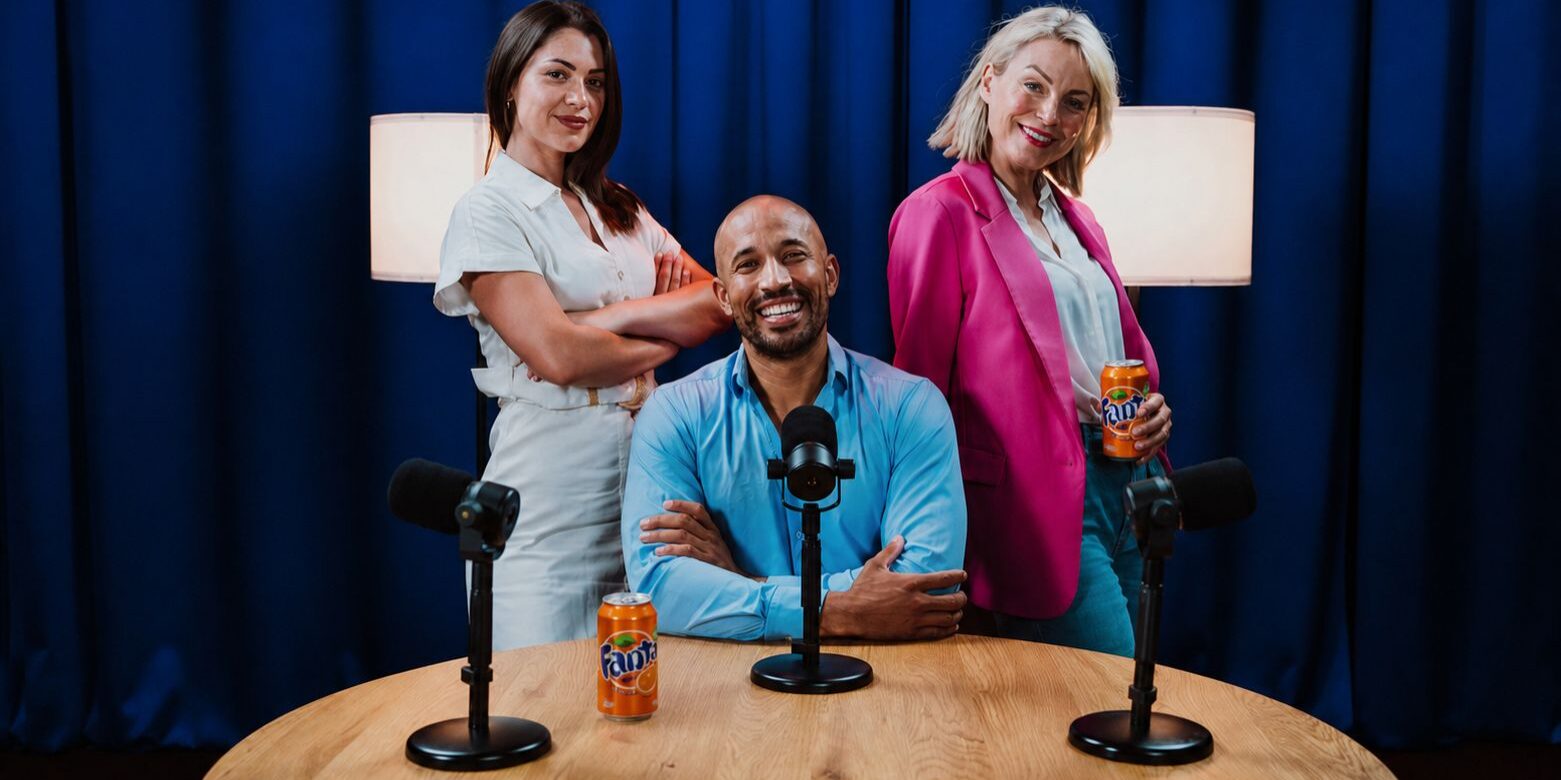
Host-read ads are content. Sponsored, yes. But if the ad is in a podcast or a YouTube video, and the host delivers the messaging, it's a part of the show.
People who buy, sell, and build around podcast advertising often talk about it like it's something else. Sure, it's bought and sold, but at the end of the day, a host-read podcast ad is an intentional inclusion in the episode. The host has decided to partner with the advertiser to personally and authentically feature them to their audience.
That's not trivial. If the host approved the advertiser, did the research, and tried the product or service (where applicable), there might be as much prep work or thought put into the ad as an intro, an interview, a news story, or any other content segment.
The Evolution of Host-Read Ads
From the earliest days of broadcasting, Jack Benny made Jell-O part of the bit. Arthur Godfrey sold Lipton like a cast member. Paul Harvey delivered a sponsor's message in his news cadence, and was trusted for both.
Podcasting inherited this format from radio. The first podcast ad I ever heard was on the Adam Carolla Show in 2010, and it was for the ManGrate grilling accessory. Adam Carolla didn't just deliver an ad; he told the story of the product. He posted videos of him using it. They were as much a part of the show as his reminders to use his Amazon Affiliate link to support the pod.
This style of ad works especially well on podcasts, because host-read ads command your attention. Traditional advertising is easier to tune out, especially when you've heard the spot before.
The Proof
Audiences also view host-read ads as part of the show. Fans clip them. They quote them. There are compilations of sponsor reads on YouTube with view counts most shows would kill for. Bill Burr's podcast reads are being pressed onto vinyl. An actual LP of ad reads, for collectors. That doesn't happen in other mediums (although the Geico Cavemen and Jacko from Energizer both got short-lived television shows, and neither worked in longer formats).
Audiences overwhelmingly enjoy host-read ads. The data says the same thing, and it even contradicts the listeners who claim otherwise. In Sounds Profitable's Ad Nauseam study, 46% of listeners said they always or often skip podcast ads. However, when they were asked about the last episode they actually heard, only 17% had skipped every ad, and 28% listened to all of them. That was the highest of any media channel tested in the survey.
Bumper went straight to playback data. They found that about 90% of the audience listens straight through each ad break (on most shows). When Nielsen compared formats, host-read ads produced 71% brand recall vs. 62% for announcer-read spots, with purchase and recommendation intent running about 50% higher.
While some might say they skip ads, when measured, they mostly don't.
And it's no coincidence the format that audiences remember and act on is the host-read ad.
Integration vs. Interruption
We often use the same terminology for two ad offerings that actually have very little in common.
An inserted, pre-produced audio ad exists independent of a specific podcast or episode. It gets inserted into a slot, and it could run anywhere. It may feel like an interruption, and when it does, listeners are likely to treat it like one.
The Host-Read Is Native
A host-read ad is native. The host may have rewritten, punched up, or riffed on advertiser-provided talking points, but it's literally in the host's voice and subject to their approval. It might even reference their personal life or their audience, and you couldn't run it on any other podcast or YouTube channel. It's authentic to that podcast.
These host-reads exist for a reason. The host researches the sponsor, accepts the deal, preps the copy, and hits record. The brand makes the same bet in reverse, allocating budget to a specific host and their audience. The collaboration is the end result, and there is often a new and unique ad read for each episode sponsored.
The Inserted Ad Is Space for Rent
By contrast, an inserted ad is the opposite. It's space for rent. It's where programmatic targeting decides the placement, for a listener the host will never know, to sell a product the host never agreed to. At best, the advertiser offers a product or category the host hasn't blocked from appearing on their show. Nobody did a deep vetting on the sponsor or ad copy. Nothing was intentional except the ad targeting, which can often serve you the same ads repeatedly, and sometimes in the same episode.
We shouldn't overlook the difference between these two formats. They aren't interchangeable in any way. Measurement needs to improve so it reflects the realities of both.
If both a host-read and a pre-produced spot are just an "ad break," the price suffers. The perception muddies. And worst of all, a wide net cast over "podcast ads" can remove it all.
The YouTube Model
YouTube already runs a proven model that separates ad formats and treats them differently.
YouTube sells its own ad placements, pre-roll and mid-roll, and most of them are skippable after a few seconds. Premium subscribers pay a monthly fee so those (often annoying) ads disappear from their watch experience.
But the sponsorships that creators embed into their videos remain for every viewer. Premium removes YouTube's ads.
For non-Premium members, the platform monetizes the container and gives the creator a cut. The creator can also monetize their own content through direct brand deals. And the creator economy on YouTube is thriving because the approach works. We buy those custom integrated ads on behalf of our clients daily, and they work very well.
Respect the Episode as Published
YouTube's classic split approach could also translate directly to other podcast players. By default, a platform distributing shows it didn't make should offer the episode as published. No edits, no ad markers beyond what the creators set, and no guidance on skipping a host-read ad or jumping ahead of a plug for the show's Patreon or personal projects.
Skip buttons are fine and necessary, so long as they work on an episode-wide basis. The fast-forward button predates podcasting by decades. Those 15- and 30-second jump decisions belong to the listener and empower them.
Platform-inserted ads in the platform's own inventory? That is also the platform's business, so long as the creator opts in, can block advertisers or categories, and gets a sizable cut of the revenue. Make those skippable and remove them for premium subscribers. Those ads are not part of the show. They are truly commercial breaks.
With host-read ads, there's less to skip. There's just more show.
But the episode as published is not the distribution platform's, and they can't do with it as they please. There's a huge difference between handing someone a remote control and building an entire system that broadly identifies the promotional or sponsored parts of an episode and offers to remove them. Playback control is up to the listener. A party that had no role in creating someone else's content shouldn't make automated editorial decisions and suggestions about it.
What This Actually Means
Host-read ads are part of the show. Full stop.
So here is my advice, and a path forward, for creators, networks, and brands.
To Creators
The more your ad reads sound like your show, the more they are a part of your show. Deliver them in your voice. Perform them like you would any other piece of content, not as an afterthought. Give them the respect your advertisers and your premium pricing deserve. Protect the integrity and worth of the platform you've built.
To Networks
Ad delivery matters. Dynamic or programmatic ads aren't inherently bad. But excessively stuffing ads into an episode isn't doing the industry any favors. Networks should take more care to cap ad loads and segment stacks, and place ad markers intentionally. Mismatched audio dropped randomly in the middle of a conversation is jarring. It tells everyone exactly where the show stops and the commerce starts, and that you aren't concerned with how the episode flows. We should demand better placement around these spots, stop overloading ad breaks, implement better capping on ad frequency/repetition, and work harder to make pre-produced ads that engage audiences.
With a host-read ad, there's less desire for audiences to skip ahead, because it truly feels like part of the show.
To Brands
Host-read ads are the reason the endorsement model keeps working. You earn attention when the audience trusts the host.
You're not buying a spot on the show. You're borrowing a relationship.
If your ad copy and talking points are set up to give the host latitude, you give the host room to be themselves. Audiences respond to that over tightly scripted reads.
The industry will always have a fresh fire to argue about. Platforms, standards, metrics, and whatever else unexpectedly develops. Most of it sorts itself out the way it always does, slowly and with a lot of LinkedIn posts. Often, our industry will stand around arguing about how to put out the fire, with some insisting it’s premature to be concerned about it, while the fire starters tell you that it doesn’t even exist. Others will argue that the fire is actually a good thing and should perhaps be bigger.
But this is the line in the sand we all need to defend: Host-read ads are content. If the host reads the ad in the episode and it's meant for their audience, it's a part of the episode. And the industry needs to respect it as such.

Glenn Rubenstein
Glenn Rubenstein is the Founder and CEO of ADOPTER Media and author of "Podcast Advertising Works," the first book on podcast advertising. Since 2007, he's helped brands engage online audiences through authentic advertising.