Podcast Attribution Isn’t Just About Tracking Performance
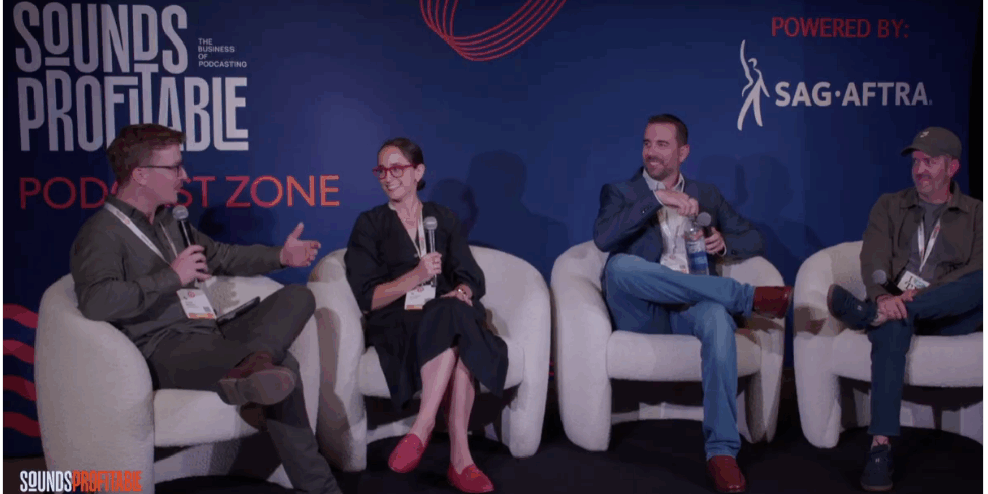
At this year's Advertising Week in New York, Adam McNeil, SVP of Client Services at ADOPTER Media, led a panel discussion that cut through the noise around podcast advertising to focus on what matters most to brands: measurable results. Joined by Allison Stadd (CMO of Ollie), Matt Drengler (Head of Partnerships at Podscribe), and Matt Bahr (Co-Founder & CEO of Fairing), the conversation surfaced insights that most brands still are not acting on.
As brands head into 2026, the takeaways from this panel have become even more relevant, especially as measurement discipline and incrementality modeling move from “nice to have” to budget-gatekeeper requirements.
Podcast attribution isn’t just about tracking performance, it’s about understanding what drives it. The panel made one thing clear: measurement is no longer optional, it’s how leading brands prove and improve performance.
The Metrics Behind Momentum
Podcast ad measurement now offers the same clarity as other digital channels. Visitation rates, purchase rates, cost per acquired customer, and ROAS are all measurable. The industry has grown from $150 million to over $4 billion globally in just over a decade, and that growth has come from results, not just awareness.
According to Podscribe’s benchmark data, 5 to 10 percent of listeners who visit your site after hearing a podcast ad actually purchase. That’s not a vanity metric; that’s conversion.
Matt Bahr from Fairing put it bluntly: for about 40 to 50 of the 2,500 brands they work with, podcasts are the number one referral source of new customers. Not second. Not third. Number one. Beating Meta.
Takeaway: Podcast campaign growth is grounded in measurable performance, not hype.

How Ollie Unlocked Measurable Growth
Allison Stadd shared how Ollie scaled its campaigns to achieve a 250 percent conversion lift. But it didn’t start that way. The first month drove five subscribers. The second month drove thirty-four. Those are not numbers that would impress a CFO. What changed? They built a proper attribution infrastructure and tested relentlessly. Within five months, they hit massive scale and now one in two tests wins on average.
“When you build a routine around listening to these people every day, you feel like you have this relationship with them,” Stadd explained. “So when they explain what some brand is and what it does for them in their lives, you are like, ‘Oh, interesting. I’ll check that out.”
Podscribe’s AI-backed ad analysis supports this: ads that score six or above on personal endorsement outperform across both conversion rate and cost per acquired customer.
Key lessons: Build reliable podcast attribution early, test consistently before scaling, and use survey insights to validate conversion data. The takeaway is simple: consistent testing and clean data turn early results into long-term ROI.
What Makes Podcast Attribution Unique (And Challenging)
Unlike click-based channels, podcast attribution relies on multiple signals such as survey responses, promo codes, and delayed conversions. Listeners might purchase weeks after hearing an ad, and that long-tail impact often hides true performance. Understanding time-shifted behavior separates reactive marketers from strategic ones.
Building Your Measurement Infrastructure
The panel was direct about what separates strong campaigns from forgettable ones:
- Stop treating podcast campaigns like Facebook. You won’t see immediate performance when an episode drops. Attribution windows exist for a reason. One of Adam McNeil’s clients ran a campaign on Morbid more than two years ago and still receives post-purchase survey responses citing that show every week. That’s the long-tail effect no one warns you about.
- Signal matters more than early ROI. The brands that succeed are the ones focused on whether the channel is moving the needle within the media mix, not whether month one was profitable.
- Build a portfolio, not a one-show bet. Combine host-read placements, targeted insertions, and run-of-network buys. The run-of-network approach is particularly underrated. You can break out reporting on a per-podcast basis, identify which shows perform best, then double down on those or on similar genres.
- Listen to your customers. Post-purchase surveys reveal what actually drives conversions. When you compare click data and promo code data against survey data, you often find that last-touch attribution has been misleading you. Finance leaders especially respond to this kind of first-party truth when you make the case for budget reallocation.
Together, these practices form the groundwork for true measurement maturity.
Turning Data Points Into A System That Works
When discussing attribution, the panel emphasized that success depends on triangulation. Combine pixel-based attribution, post-purchase surveys, and internal analytics. No one should be grading their own homework.

“My source of truth as a marketer is combining all of the above into a triangulation, led by our internal data team on an ongoing basis.”
Allison Stadd, Chief Marketing Officer of Ollie
Measurement infrastructure is not optional. Use Podscribe for attribution, Fairing (or a similar platform) for survey data, and your internal analytics to connect it all. Without that foundation, you’re just spending money and hoping. Triangulation builds truth and trust in your results.
The Long Tail Of Real Results
Long-term measurement matters.Podcast ad performance compounds over time. Episodes remain searchable, shareable, and evergreen. That means a single host-read ad can generate conversions months or even years later.
Brands that commit to a measurement-first approach can quantify this delayed influence through surveys and recurring data reviews.
Conclusion: From Test Channel To Proven Performer
Podcast advertising attribution isn’t plug-and-play. It requires patience, infrastructure, and discipline. But for brands that commit, it’s one of the few channels where you can reach genuinely new audiences at scale and prove ROI with confidence.
Watch The Full Panel From Advertising Week 2025
For marketers planning 2026 budgets, this panel made one thing clear: podcasting is no longer a test channel. It’s a full-funnel performer that rewards data discipline and creative trust.

Sherry Del Rizzo
Sherry leads editorial at ADOPTER Media, translating the agency's campaign experience and podcast advertising expertise into education for the industry. Her job, in short: take what ADOPTER learns from running real campaigns and turn it into something worth reading.