Netflix Viewers Are Showing Up for Something Familiar
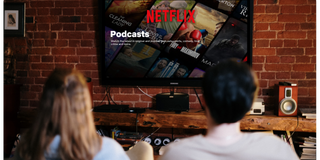
Samba TV just released the first-ever Netflix Podcast Ranker, covering Q1 2026. Coming in at number one is The Breakfast Club, accounting for over 40% of all Netflix podcast views, with 3x the views of the #2 title. Nearly half of viewers watch within 48 hours of an episode's release. It is absolutely a podcast. The replay podcast recently crossed one billion downloads, and DJ Envy, Charlamagne Tha God, Jess Hilarious, and Loren LoRosa have earned every bit of that.
It is a nationally syndicated morning radio show, and the team has been running live from Power 105.1 every weekday for fifteen years. The podcast, its YouTube channel, and now the Netflix version are distribution points. The radio show is the daily engine. The origin story of this number one show is the most important thing to note in Samba's data.
Existing podcast audiences aren't flocking to Netflix. Netflix viewers are showing up for something familiar they possibly didn't know was classified as a podcast.
The Core Signal
Samba estimates 13% of Netflix-viewing households watched at least one cumulative minute of a Netflix podcast in Q1, roughly 10 million homes. A quick note on methodology, via Podnews: Samba measures smart TVs only, and the 13% spans three months rather than a single month, so it isn't directly comparable to monthly figures elsewhere.
Here's what stands out more. Samba compared each show's Netflix rank against its Podscribe rank on audio downloads and YouTube views. Almost no correlation. Netflix is not inheriting the audio podcast charts. Behind the Bastards (#34 on Podscribe), Spittin' Chiclets (#443), and The Ringer NBA Show (#454) all fall outside the top half on Netflix. Those fans are loyal. They're just loyal in the audio environments they already use.
The industry has increasingly framed YouTube's rise as proof that podcasting is becoming a video-first medium. The consumption data doesn't actually say that. The Cumulus Media and Signal Hill Insights Fall 2025 Podcast Download report found that 92% of podcast consumers still choose to listen rather than watch. Nearly half of YouTube podcast users primarily listen rather than watch, even on a video-first platform. For a lot of that audience, YouTube is functioning as a really good podcast app, not a video destination. The pool of people who actually want to watch a podcast, the exact pool Netflix is competing for, is a narrower slice of the total podcast audience than the raw YouTube numbers suggest. Netflix isn't fighting for the whole podcast audience. It's fighting for the subset that wants to watch.
Who Is Showing Up, and Why
The titles driving Netflix podcast viewership have something in common, and it isn't a podcast audience.
#1: The Breakfast Club. Over 40% of all Netflix podcast views in Q1 (Bloomberg pegs it at 44%), roughly 3x the views of the #2 title. The engine is still radio. The show runs live weekdays from 6 to 10 a.m. ET on Power 105.1, syndicated across 90+ markets, reaching 4.5 million weekly listeners. Radio's weekly reach still outweighs podcast and YouTube consumption of the same content by volume, which says less about the podcast's strength and more about the scale of AM/FM's daily national footprint. The franchise also anchors the Black Effect Podcast Network, Charlamagne and iHeartMedia's joint venture with 60+ shows and 11 million monthly downloads. When a Netflix viewer clicked, they recognized it from the dial.
One detail worth flagging: only about 10% of Breakfast Club viewing on Netflix happens in the early morning radio window, and 44% happens in daytime or primetime. These are TV viewers finding a show they already knew, on their own schedule.
#2: A Bridgerton companion podcast. Less surprising than it looks. Netflix's first true aftershow, Beyond Stranger Things with Jim Rash, launched in 2017, modeled on AMC's Talking Dead from 2011. Aftershows and companion podcasts are a proven streaming format. Netflix didn't invent the trend. It just re-labeled this instance as a podcast. When a Netflix viewer clicked, they knew Bridgerton. The podcast classification came second.
Sports is the inverse signal. Netflix is not a regular sports destination for US audiences, and sports podcast fans have established audio and YouTube habits. That combination produces exactly what Samba measured: Ringer and Barstool titles quietly underperforming their audio rankings. Platform-context mismatch, not a referendum on sports podcasts.
The AVOD Audience Makes the Pattern Cleaner
As of August 2025, 45% of US Netflix households watched on the ad-supported tier, up from 34% in 2024. That audience skews older, less affluent, and more cord-cut than the classic podcast subscriber. 34% of Standard With Ads users do not subscribe to any traditional pay-TV service. Netflix isn't reaching existing podcast audiences through podcasts on Netflix. It's reaching its own audience through podcast-format content that audience already recognized. That audience brings a broader footprint alongside the existing listener base, not instead of it.
If This Format All Sounds Familiar
Radio-to-TV crossover has a long history. In the 1980s, C-SPAN annually videotaped and repeatedly aired Larry King's Mutual Broadcasting radio show on cable TV, and in some years simulcast it live, giving radio's biggest late-night voice a television surface long before it became the default. In June 1985, CNN launched Larry King Live, which King hosted for 25 years while continuing his Mutual radio show until 1994. King is the clearest early template for what happens when a dominant radio host gets a nightly TV cut of the same franchise.
Howard Stern did it most famously in the three decades since. From June 1994 to July 2005, E! ran a nightly half-hour cut of The Howard Stern Show, eleven straight years of a daily radio broadcast edited down for television. That's the same format Netflix just accidentally validated by broadcasting The Breakfast Club, a radio powerhouse that is now also Netflix's #1 podcast.
There's a catch, though. Howard Stern is still on the air. He re-signed with SiriusXM for three more years in December 2025. And notably, SiriusXM has never published a Howard Stern podcast on the open ecosystem. Access is gated behind SiriusXM All Access, with Howard 100 carrying the live show and Howard 101 carrying the Wrap-Up Show, Sternthology archive, specials, and concerts. Full-length interviews, show clips, and musical performances live inside the SiriusXM app for subscribers. No RSS feed. No Spotify version. No YouTube upload of the full show. That's a generation of potential living-room viewers walled off from a daily radio franchise that already proved it works on television.
Another round of mid-tier audio podcast licensing will not move the needle in the same way. The platform doesn't need a bigger podcast catalog. It needs more franchises its viewers already know.
Takeaway
One quarter, one measurement partner, one platform. This isn't a trend yet, but it's encouraging. Netflix isn't co-opting the existing podcast audience. It's expanding it.
Netflix isn't co-opting the existing podcast audience. It's expanding it. The audience showing up on Netflix is heavier-TV, more diverse than the audience podcasting has historically indexed against which is exactly the kind of growth the industry has been working toward. Where podcasting has historically under-indexed, Netflix is over-indexing, and the two fit together rather than competing.
For the podcasting industry this is a growth story, not a zero-sum one. More surfaces means more audiences, and more audiences means more opportunity for the creators, networks, and brands that have spent two decades building the medium. For Netflix, the roadmap is to lean into the franchises its viewers already recognize and the audiences the medium is still working to fully serve.
If the category keeps growing this way, everyone wins.

Sherry Del Rizzo
Sherry leads editorial at ADOPTER Media, translating the agency's campaign experience and podcast advertising expertise into education for the industry. Her job, in short: take what ADOPTER learns from running real campaigns and turn it into something worth reading.