
How Podcast Ads Powered Ollie's Branded Search
With ADOPTER Media and Be-Incremental, Ollie found the podcast demand in its search data, cut branded search spend by 40%, and still grew podcast-driven traffic 30%.
Listeners Were Hearing About Ollie on Podcasts
Ollie makes fresh, human-grade dog food for people who treat their dogs like family. Podcast advertising has become one of the ways the brand meets those people for the first time, and it was working.
They just weren't acting on it the way the dashboard expected.
| Client | Ollie, fresh dog food delivered by subscription |
|---|---|
| Partners | ADOPTER Media (podcast advertising) and Be-Incremental (incrementality and search optimization) |
| The Problem | Podcast listeners were converting through branded search, so paid search was getting the credit and budget for demand created by podcast ads |
| What Changed | Branded search spend cut by about 40%, with savings modeled for reinvestment in podcasts |
| The Outcome | Podcast-driven traffic grew about 1.3×, even with less spent on branded search |
About 1 in 10 of the conversions Ollie's branded search campaign was getting credit for could be reattributed to podcast advertising.
Once Ollie could see that, it cut branded search spend by roughly 40%. Podcast-driven traffic didn't dip. It grew about 1.3×.
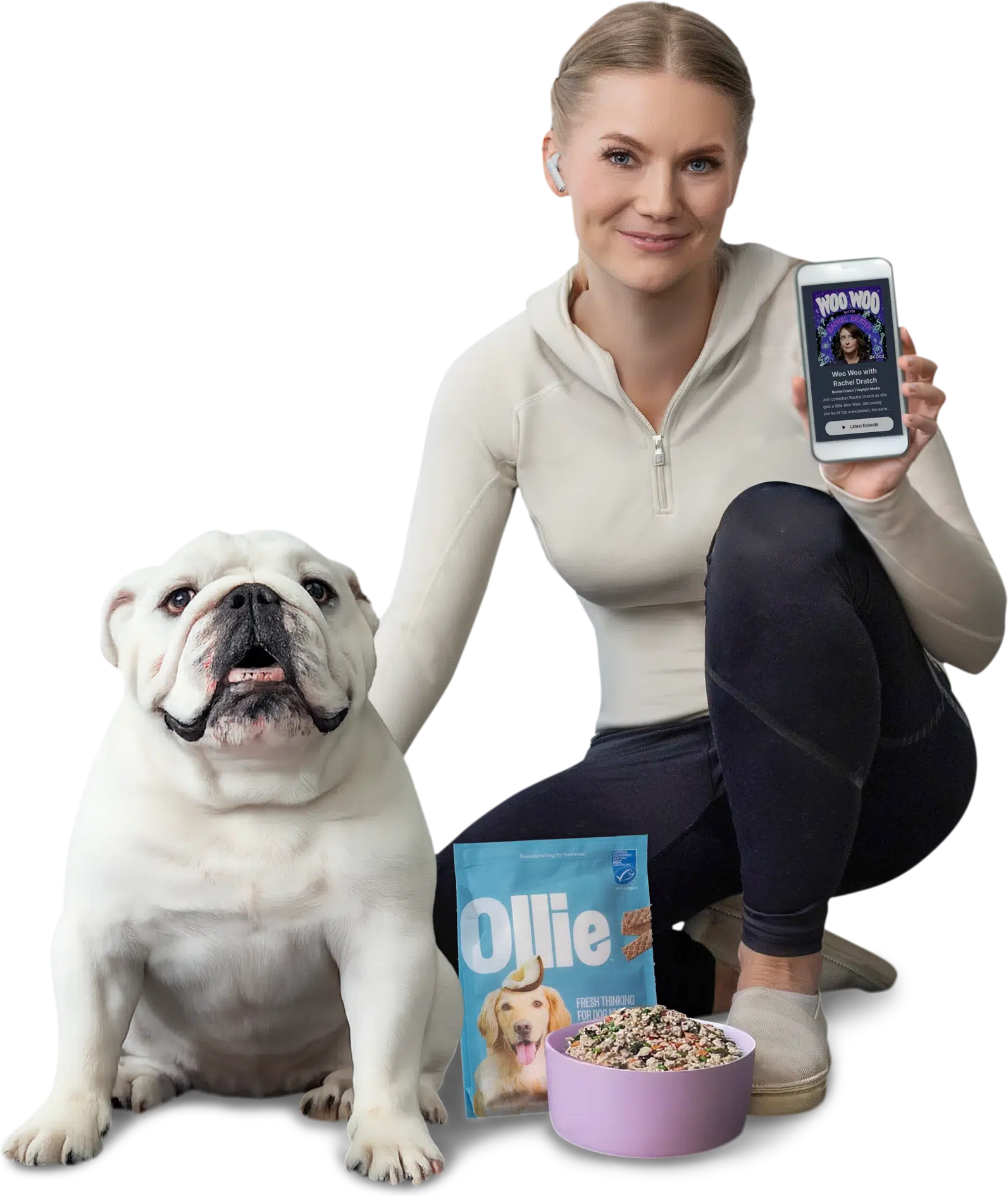
One Customer Tells the Whole Story
In a perfect world, people hear a podcast ad and immediately type a URL into their phones. In reality, many are doing something else while listening: driving, walking the dog or folding laundry. The brand name sticks, and later, when they're ready to make a purchase, they open Google, search for Ollie and click the first ad they see.
In fresh dog food, that gap between hearing and buying is often wide. Switching what your dog eats is a big decision. People think it over, maybe check with whoever else in the house feeds the dog, and come back when they're ready. The longer that gap, the more likely the sale shows up in Google search instead of the podcast that drove them there.
That one habit can create an accounting problem. The podcast does the work of building the demand, but it's Google that records the visit. If the brand also bids on its own name (and most brands do, because a competitor will if they don't), paid search collects the conversion too.
On paper, paid search looks like the winner winner, chicken… err, Ollie dinner. The podcast looks like it is falling short.

When the post-purchase survey asked how they first heard about Ollie, they answered "Podcast" and named the exact show!
Anatomy of an Ollie Order
The chart below shows one of the many ways a sale got misfiled for Ollie. Paid search gets the click. The welcome offer gets the redemption. The podcast, the channel the customer said first introduced them to Ollie, gets nothing in either the click data or the code data. The only thing connecting the journey back to podcast advertising is the customer's own answer.
Multiply that by thousands of orders and you get a hidden efficiency problem: a brand paying a podcast to create demand, then paying Google a second time to capture it.
- Step 1
Hears Ollie on a podcast
What the data seesNothing. No clicks, no codes.
- Step 2
Googles "Ollie dog food"
What the data seesA branded search
- Step 3
Clicks the top sponsored result
What the data seesPaid search gets the credit
- Step 4
Buys with the default 70% off welcome offer
What the data seesWelcome offer, not the podcast code
- Step 5
"How did you hear about us?"
Customer responsePodcast, and names the show
The click data gives the credit to Google, and the code data gives it to the welcome offer. The only thing pointing back to the podcast is what the customer told us.
We've written about this pattern before in When Your Podcast Ad Results Show Up as "Google Traffic". Ollie wanted to go a step further. Not just see the overlap, but put a number on it and act on it.
“We have been on Team ‘Grow Ollie’ from Day 1! We strive to go beyond podcast ads that hammer home how much hosts (and their dogs) truly love their products and understand how these voices and audio advertising are interacting with their greater ecosystem. Sometimes that means scaling back smartly - planning big seasonal partnerships and episode drops on certain days to avoid interfering with read-outs on other channels - and every now and then, we get the opportunity to work directly with another data partner like Be-Incremental to deliver savings and results that improve Ollie’s bottom line. Having our client say, ‘this actually worked, thank you’ is the biggest win in our books!”
The Questions Worth Asking
Attribution asks
"Can we connect this sale to an ad?"
Incrementality asks
"Would this sale have happened without it?"
Here's a simple way to picture it. Say 1,000 people see a branded search ad and 100 buy. Maybe 70 of them were already on their way and would have made the purchase anyway. The ad's real contribution is the other 30. Those are the incremental conversions, and any spend aimed at the 70 isn't creating customers; it's just costing you more for ones you'd already earned.
For Ollie, the question pointed straight at branded search. How much of that spend was winning new customers, and how much was intercepting people who were already looking for Ollie, many of them sent by podcasts?
100 Buyers After a Branded Search Ad
Illustrative example, not Ollie data
“Be-Incremental is my favorite industry hack that no one is talking about. Google and Meta like to take credit for everything - and being down-funnel, they often get away with it! With tools like Be-Incremental, we can ensure that podcast impact is able to break through the ‘noise’ of misattribution. Brands spend wherever they see a clear (read: data-driven, measurable) pathway to conversions. Be-Incremental saves clients money by preventing spending twice for the same traffic - money that can be re-invested into top-of-funnel that drives growth, unlike doubling down spend into bottom-of-funnel channels. ADOPTER + Be-Incremental is a perfect match for helping brands get visibility into how top-of-funnel is performing, so that they can invest in true growth.”
Partners in Success
Ollie brought in two partners with different jobs. ADOPTER Media runs the podcast side, the part of the plan built to create demand. Be-Incremental brought an incrementality and search optimization approach designed to find branded search spend going to people who were likely to convert organically anyway. Working side by side, the teams looked at how podcast advertising, branded search and customer behavior connected, and how much paid search spend was capturing existing demand rather than creating new demand. Here's how they broke it down.
How the analysis worked
Reattribute
The team looked at the conversions credited to branded search and identified how many could be reattributed to podcast advertising.
Optimize
Using Be-Incremental's approach, Ollie reduced branded search spend on traffic that was likely to convert organically anyway.
Watch the demand
After the reduction, the team tracked podcast-driven traffic to see whether pulling back on branded search affected underlying demand.
Model the reinvestment
Finally, the team estimated what the savings could achieve if they were reinvested in podcast advertising.
“Honestly, we were paying for clicks we’d already earned. Be-Incremental let us stop bidding on branded auctions with no competitors in them, which cut branded search spend by about 40% without losing the customers podcasts were sending us.”
What the Numbers Said
About 10% reattributed to podcasts
Roughly one in ten conversions credited to branded search could be reattributed to podcast advertising.
In other words, the podcast was building the demand, and paid search was being recorded as the reason for the sale.
Branded search spend dropped by about 40%
Using Be-Incremental's optimization approach, Ollie cut branded search spend by approximately 40%, trimming spend against traffic that was likely to convert organically anyway.
Podcast-driven traffic grew 1.3×
Every marketer asks the same slightly nervous question at this point: would cutting branded search hurt? The data suggests it didn't.
Since Ollie put Be-Incremental's recommendations in place, podcast-driven traffic has grown approximately 1.3×, even with branded search spend substantially reduced.
Less Spent on Search, More Traffic from Podcasts
Both charts are indexed to 100 at the starting point. Figures are approximate.
Pulling back on branded search didn't appear to shrink the quality traffic podcasts were generating. Listeners kept finding their way to Ollie, and Ollie spent less to reach customers who were already looking for the brand.
“ADOPTER Media brings customers to Ollie’s door. We make sure Ollie only pays to guard that door when a competitor is knocking.”
Turning Savings into Growth
An approximate 40% cut to branded search can free up real money. The smarter question is where that money should go next. Based on Ollie's monthly investment across branded search and podcasts, the analysis modeled what would happen if those savings were redirected into podcast advertising.
The estimate: approximately 2% additional branded search traffic. In other words, the same money could go toward creating new demand instead of paying to capture demand Ollie already had.
The Reinvestment Loop
- 1Podcast ads create demand
- 2Listeners search for Ollie
- 3Be-Incremental trims the cost of capturing that search
- 4Savings go back into podcasts
- 5More demand, created
Spend less capturing demand and create more
The podcast created the demand.
Paid search captured it, and got the credit.

Insights for Your Brand
Ollie's situation is far from unusual. If a few of these sound familiar, there's a good chance some of your podcast results are hiding in your search reports:
Signs You Might Be Paying Twice
- Branded search is one of your "best" channels on cost per acquisition, and it always has been.
- Podcast promo code redemptions look thin, but "podcast" keeps showing up in your post-purchase survey.
- Branded search volume climbs when podcast flights are running.
- Your site runs a welcome offer that's as good as, or better than, the podcast code.
- Search and podcast budgets are judged by different people looking at different dashboards.
Key Takeaways
- Branded search is impacted by more than your paid ad spend. If you're investing in podcast ads, some of what shows up in your search numbers can actually be the result of podcast performance.
- Promo codes and clicks will miss some of your podcast customers. The Ollie customer we started with heard the ad, searched and made a purchase, and neither one credited the podcast. But a simple post-purchase survey did. That's why we triangulate: pixels show what customers do, surveys show what they remember and promo codes show what they act on. Together, they tell the full story.
- Treat branded search and podcasts as two different jobs. Bidding on your own name helps you catch people who are already looking for you. Podcast advertising is what gets them looking in the first place, so it makes sense to budget for each one separately.
- Let the data make the call. Ollie had the numbers in hand before trimming branded search, and podcast-driven traffic kept climbing afterward.
Understand Your Channels
Ollie's goal was never just a cheaper branded search line. It was knowing which channel actually created the customer. Once known and understood, attribution stopped being a reporting exercise and became an investment strategy.
Frequently Asked Questions
Do podcast ads increase branded search?
Podcast advertising can increase branded search, and that impact is easy to miss in last-click reporting. Listeners rarely act in the moment, so many search for the brand name later. For Ollie, roughly 10% of conversions credited to branded search could be reattributed to podcast advertising.
What is incrementality in podcast advertising?
Incrementality measures whether an ad caused a sale that would not have happened otherwise. Attribution connects a sale to an ad, but incrementality asks whether the ad actually made the difference.
Should brands stop bidding on their own brand name?
Not necessarily. Ollie cut its branded search spend by about 40%, but it didn't turn it off. Bidding on your own name still protects you from competitors. The point is to stop overpaying for customers who were already on their way.
How do you measure podcast impact when listeners skip the promo code?
Combine sources. Post-purchase surveys ask customers where they first heard about you, and branded search analysis shows where podcast-driven demand ends up converting. The Ollie customer who used the welcome offer instead of the podcast code is exactly who those methods catch.
For brands investing in audio, branded paid search should not automatically be treated as an independent acquisition channel.
Podcast Advertising
ADOPTER Media
We Turn Podcast Ads & YouTube Sponsorships Into Endorsements Audiences Trust
Incrementality & Search Optimization
Be-Incremental
Helping Brands Optimize Marketing Channels With Real-Time Data Driven Analysis

Is Your Podcast Demand Hiding in Search?
ADOPTER Media helps brands see what their podcast advertising is really driving, across every channel it touches.
Talk to Our Team